Àdìrẹ is one of the oldest textile traditions in West Africa. The word is Yoruba. It means, roughly, to tie and dye and the technique has been practised in Nigeria for centuries, most famously among the women of Abeokuta, who passed the knowledge from generation to generation, hand to hand.
Kíléntár did not invent adire. What it does is bring that tradition to contemporary pieces made by skilled artisans, using the same processes, the same patience, and the same absolute refusal to rush.
Understanding what goes into an adire piece changes how you wear it. Not because it makes the dress heavier with significance — but because it makes it lighter. You stop worrying about it. You start trusting it. This fabric has survived centuries. It is going to survive your evening.
→ Shop the adire collection at kilentar.com
By the numbers
| 14 | 0 | 100s |
| hours per print, before a single seam is sewn | identical pieces ever produced | of years of tradition behind every piece |
THE CRAFT
What àdìrẹ actually is - and why it takes so long


Àdìrẹ is a resist-dyeing technique. Before the fabric ever touches a dye bath, sections of it are treated to resist the colour. Some are tied tightly with raffia or thread. Others are painted with a cassava starch paste that blocks the indigo from penetrating. The result is a pattern created as much by the absence of dye as by its presence.
There are two primary forms. Àdìrẹ eleso involves tying or stitching the fabric — gathering small sections and binding them tightly. This is where Kílẹ̀ńtàr's shibori-influenced pieces draw from. Àdìrẹ eleko involves applying starch paste by hand — using a comb, a feather, or the artisan's own hand — before the cloth is submerged.
Both processes are slow. The tying alone, for a piece like the Gbere Dress or the Iwole Skirt, where each print is individually hand-threaded, takes hours before the first drop of dye is applied. After dyeing, the cloth must dry. The ties or starch are removed. The pattern is revealed. Then the individual panels are sewn together in-house.
For the Gbere Dress specifically: 14 hours of threading and dyeing per individual print — and the dress uses multiple prints, sewn together layer by layer. The fabric alone, before any construction begins, represents days of work by a single pair of hands. That number is not marketing. It is simply what the process takes.
THE COLOUR
Indigo. The dye that has always been there.


The traditional dye for adire is indigo — one of the oldest natural dyes in the world, derived from the Indigofera plant and used across cultures from West Africa to Japan for thousands of years. In Yoruba adire tradition, indigo gives the cloth its characteristic deep blue. From the palest sky tone to the deepest navy, the shade depends on how long the fabric is left in the dye bath, and how many times it is dipped.
Kílẹ̀ńtàr's pieces are produced in the signature blue and white palette that has defined the tradition for centuries. The depth of the blue, the crispness of the white, the way the two colours move into each other at the edges of a pattern — this is what you are looking at when you look at the fabric. The record of every decision made during the dyeing process.
No two dye baths are identical. The temperature of the water. The concentration of the dye. The amount of time the cloth spends submerged. All of it produces subtle variation — which is why every Kílẹ̀ńtàr adire piece carries the note: the fabric is hand-dyed, so while the style remains identical, each print may vary slightly. This is not a disclaimer. It is a feature.
THE COLLECTION
The Kílẹ̀ńtàr àdìrẹ pieces
Every piece below is made using hand-dyeing techniques rooted in the adire tradition. Some use the shibori method of hand-threading and resist-dyeing. Some use classic tie-dye placements on silk. Some combine Faso Dan Fani handwoven cotton with adire dyeing — craft layered on craft. All of them are blue and white. All of them are one of a kind.
01 · THE GBERE DRESS
The most technically demanding piece in the collection. Each layered print is hand-threaded and hand-dyed using the shibori technique — 14 hours per print. Extreme fitted waist, corseted body, flared layered hem. Visual depth no machine can replicate.


02 · THE KOSI SET
Top, Skirt and Dress — silk in intricate adire tie-dye placements. The top is a corset-style piece with a long versatile tie. The skirt and dress are A-line maxis. No two pieces identical.


03 · THE WATA SET
Skirt and Dress — three distinct adire tie-dye placements on silk, hand-dyed by female artisans in Nigeria. A-line maxi silhouette. The dress features signature beaded sleeve detailing inspired by the water world.


04 · THE TAPA SET
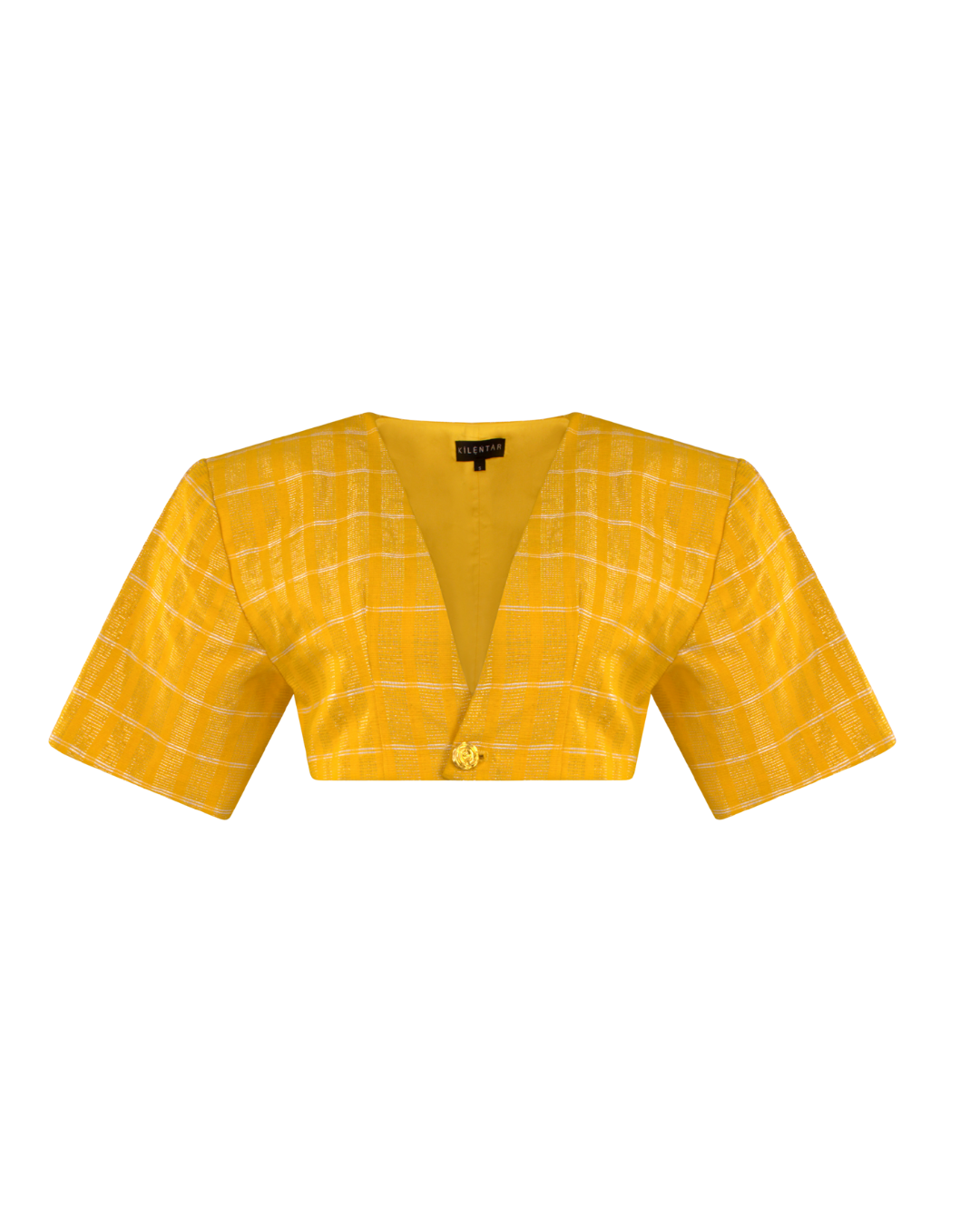
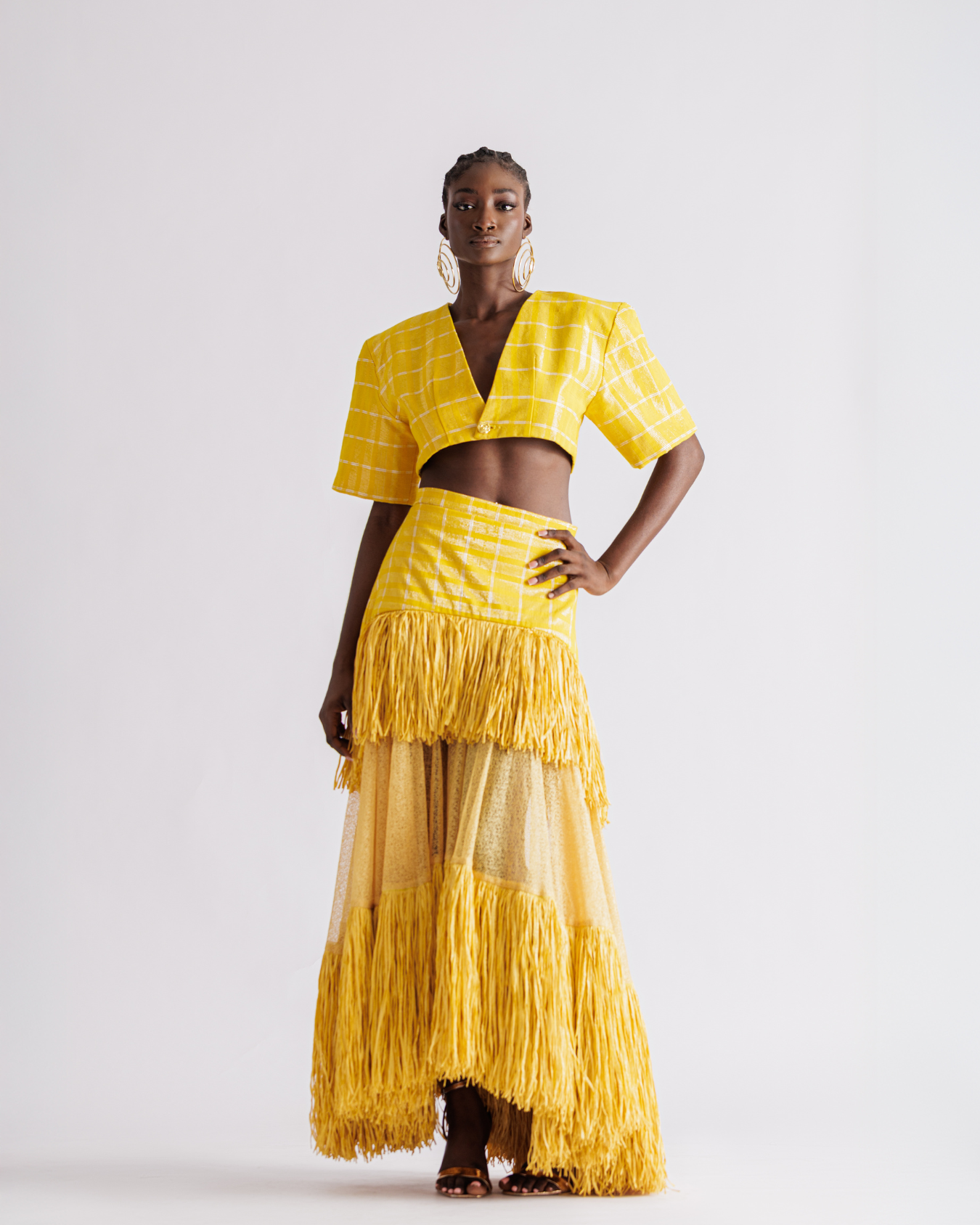
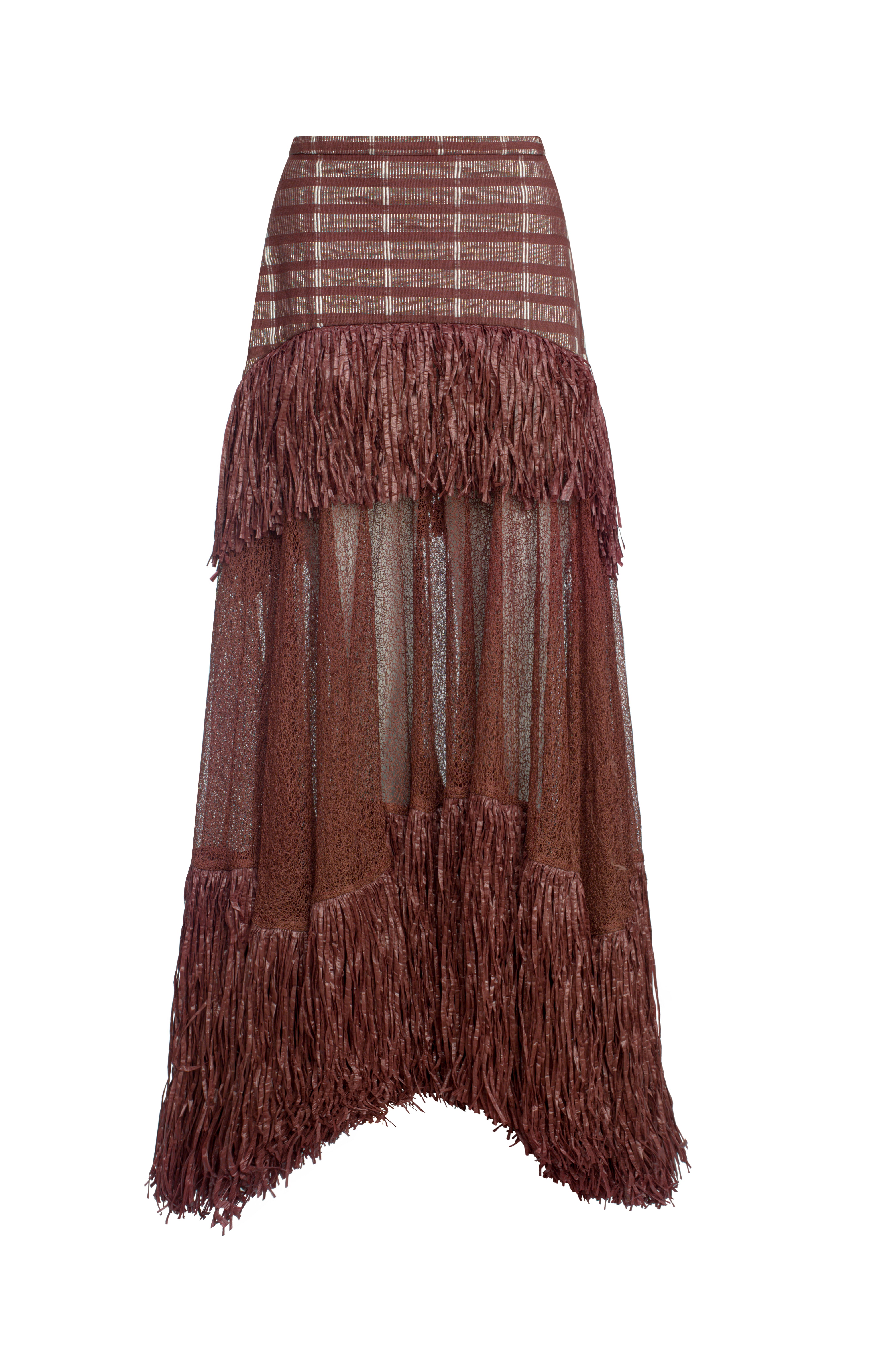
Top, Skirt and Pants — where the other adire pieces use silk, the Tapa pieces begin with 100% handwoven Faso Dan Fani cotton. Then hand-dyed using the adire technique. Craft layered on craft. Fringe detailing throughout.


05 · THE IWOLE SET
Bralette and Skirt — the bralette hand-dyed using the adire technique with intricate beaded sleeves and a front tie closure. The skirt uses the shibori method: 14 hours of hand-threading and dyeing per print. High-waisted, corseted, flared. The strongest statement in the collection.


WHY IT MATTERS
The difference between printed and hand-dyed
The most important thing to understand about adire fabric is what it is not. It is not a print. It is not a pattern applied to the surface of a cloth by a machine. It is a pattern that comes from inside the cloth — from the way the dye was absorbed and resisted, from the physical manipulation of the fabric before and during the dyeing process.
Every line, every edge, every place where the indigo deepens or lightens — that is the history of how the cloth was handled. You are not looking at a design. You are looking at evidence. Evidence of time, of hands, of a process that cannot be shortened without destroying exactly what makes it worth wearing.
HOW TO WEAR IT
Caring for àdìrẹ fabric
Adire fabric — particularly the silk pieces — requires dry cleaning. The hand-dyed process creates a surface more susceptible to colour bleed and fading from water and heat than machine-dyed fabric. Dry cleaning preserves the depth and clarity of the blue and white patterns.
Store adire pieces away from direct sunlight, which will fade the indigo over time. Hang on padded hangers or fold flat in a garment bag. Avoid prolonged contact with other garments — particularly light-coloured ones — until you are confident the dye is fully set.
The slight ariation in pattern from piece to piece means your adire garment is genuinely unique. There is no other one.
Every piece of adire cloth is the record of a process that cannot be shortened. The hours are visible in the fabric. That is the whole point.
Frequently Asked Questions
What is adire fabric?
Adire is a traditional Nigerian resist-dyeing technique rooted in Yoruba textile heritage. Fabric is tied, stitched or starch-pasted before being submerged in an indigo dye bath — producing patterns created by the absence of dye as much as its presence. Kíléntár's adire pieces are made by skilled artisans using this same process.
Why does adire take 14 hours to make?
The 14 hours refers to the threading and dyeing time per individual print on pieces like the Gbere Dress and Iwole Skirt. The tying alone takes hours before the first drop of dye is applied. After dyeing, the cloth must dry, the bindings are removed, and only then are the panels sewn together. The time cannot be shortened without compromising the result.
How do I care for adire fabric?
Adire pieces — particularly silk ones — require dry cleaning. Store away from direct sunlight and hang on padded hangers or fold flat in a garment bag. Full care instructions are included with every order.
Are all adire pieces different?
Yes. No two dye baths are identical, so every Kíléntár adire piece carries slight variation in pattern. The style remains the same; the print is always unique. This is not a disclaimer — it is the nature of the craft.
A NOTE ON SIZING
Every Kílẹ̀ńtàr piece is made for women in Sizes UK 4–24 / US 0–20. Each product page at kilentar.com carries a detailed size guide. If you are unsure, our team is available to help you choose. We would rather spend five minutes getting it right than have you guessing. Especially on a day this significant.